
Readiness guide
Why Verifying Intel Matters in Effective Surveillance
In surveillance, raw observation is only the starting point. Learn why verifying intel prevents false conclusions, reduces risk, and improves decision-making.
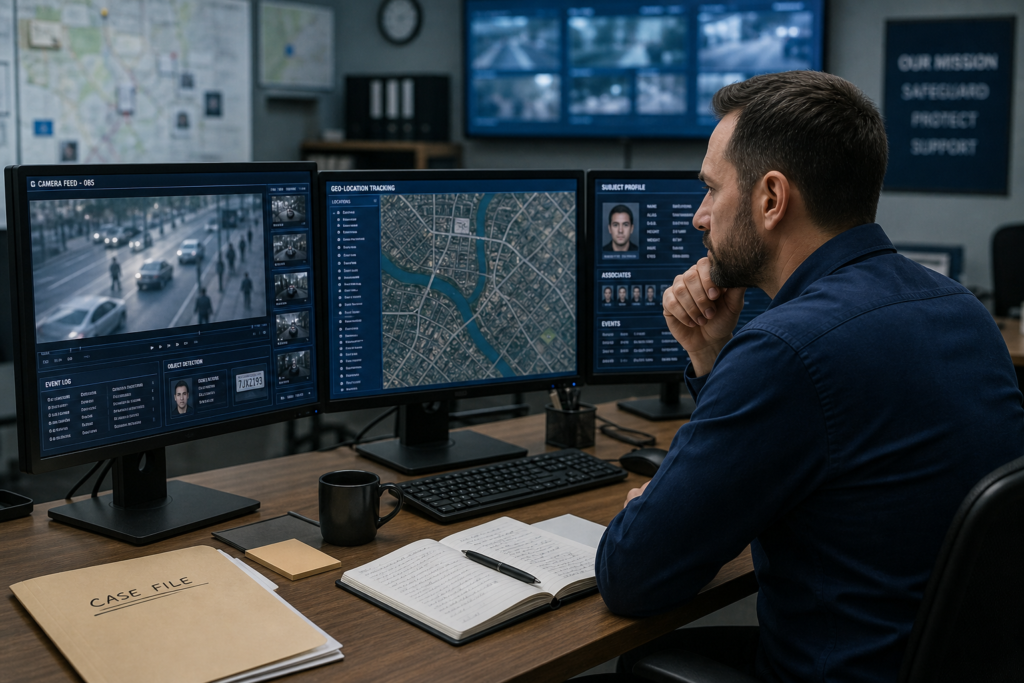
In surveillance work, the raw observation is only the starting point. What separates useful intelligence from noise is verification. A report that sounds credible, a blurry camera image, a partial license plate, or a confident eyewitness can all point you in the right direction—but only if the information is checked, cross-referenced, and tested against other sources before anyone acts on it.
For tactical enthusiasts, emergency preppers, and anyone who values practical situational awareness, this matters a lot. Whether you are monitoring a property, assessing a route, or trying to understand a developing situation, poor verification can lead to bad decisions fast. The result can be wasted time, unnecessary risk, and a false sense of confidence. In surveillance, confidence without confirmation is one of the most expensive mistakes you can make.
Why Intel Verification Matters
Intel verification is the process of confirming that a piece of information is accurate, current, and relevant before it becomes part of your decision-making. In a surveillance context, that means checking whether what you saw, heard, or were told is actually true—and whether it means what you think it means.
This is important because surveillance rarely gives you a complete picture. You may only have fragments:
- a vehicle circling a property
- a person taking photos near an access point
- a social media post about suspicious activity
- a neighbor’s report of unfamiliar visitors
Any one of these could be meaningful. Any one of them could also be harmless, misread, or outdated. Verification helps you sort signal from noise. It protects you from reacting to rumors, assumptions, and confirmation bias.
Good surveillance is not just about seeing more. It is about knowing what your observations actually mean before you act on them.
What Happens When Verification Is Weak
Poor verification leads to flawed conclusions because it encourages people to fill in the blanks with assumptions. In surveillance, those assumptions can be dangerous.
False positives waste time and resources
A false positive is when something appears threatening but is not. Maybe a contractor’s truck was mistaken for a scout vehicle. Maybe a lost delivery driver triggered a response. Maybe ordinary foot traffic looked suspicious because the context was missing. When every report is treated as fact, teams end up chasing harmless activity instead of focusing on real risks.
False negatives create blind spots
The other side of the problem is missing what actually matters. If you ignore a report because it seems “probably nothing,” you may overlook a pattern that would have been obvious with better verification. A single event can look harmless. Three related events, viewed together, may show reconnaissance, testing, or preparation.
Bad assumptions spread quickly
Once unverified intel is repeated, it gains credibility simply by being repeated. This is especially true in group settings, where one confident voice can set the tone for everyone else. If the first version of a story is wrong, the entire response can drift off course.
Stress makes people want quick answers
When something feels urgent, people naturally want immediate conclusions. That pressure can lead to premature action. The problem is that urgency does not equal accuracy. In fact, stress often increases the odds of poor interpretation, incomplete checking, and overreaction.
How Bad Actors Exploit Unverified Information
People with bad intent often understand that rumor and uncertainty can be more useful than direct confrontation. They do not always need to control the situation physically if they can influence what others believe.
They seed confusion
False or incomplete information can be used to create distraction. If defenders are busy responding to a fabricated concern, they may ignore the real issue. In practical terms, confusion is a force multiplier for anyone trying to observe, test, probe, or divert attention.
They manipulate reactions
Unverified intel can be designed to provoke overreaction. A false report may cause someone to lock down an area, reveal routines, waste time, or move resources away from a more important vulnerability. The goal is not always to hide; sometimes it is to make others behave predictably.
They exploit bias
Bad actors know that people see what they expect to see. If a group already believes a certain type of person, vehicle, or behavior is suspicious, then a planted detail can trigger a strong response even when the evidence is weak. This is why disciplined verification is so important: it reduces the influence of bias on your conclusions.
They rely on speed
The faster a rumor spreads, the less likely it is to be checked. Unverified claims can move through text messages, group chats, social media, and word of mouth long before anyone confirms the facts. By the time the correction arrives, the damage may already be done.
Common Verification Methods That Improve Accuracy
Verification does not require fancy equipment. It requires a disciplined process. The goal is to confirm a claim using multiple angles, multiple sources, and a clear separation between observation and interpretation.
Cross-check with independent sources
If a report is true, there should often be some supporting evidence elsewhere. Compare a witness statement with camera footage, a time stamp, a location detail, or another observer’s account. Independent confirmation is stronger than repeated hearsay.
Confirm time, place, and context
Many surveillance errors happen because a detail is real but out of context. A vehicle seen at 2 p.m. may be irrelevant if the concern is after dark. A person near a fence may be a worker if there is a maintenance crew on site. Always verify the when, where, and why before assigning meaning.
Look for patterns, not single points
One observation can be misleading. Repeated observations are more useful. For example, the same vehicle appearing on multiple days, or the same route being used repeatedly, is more informative than a single pass. Patterns help separate random events from deliberate behavior.
Use source reliability carefully
Not all sources are equal. A trained observer, a camera, and a social media rumor are not interchangeable. Ask practical questions:
- How close was the source to the event?
- Did the source see it directly or hear it secondhand?
- Does the source have a reason to exaggerate or minimize?
- Is the information recent enough to matter?
Separate observation from interpretation
This is one of the most important habits in surveillance. An observation is what you actually saw or recorded. An interpretation is what you think it means. Write them separately if possible. “White pickup truck parked near entrance for 12 minutes” is an observation. “Possible casing activity” is an interpretation. Keeping those distinct reduces error.
Compare against known baselines
Good verification depends on knowing what normal looks like. If you understand regular traffic patterns, delivery schedules, maintenance visits, and local routines, it becomes much easier to identify genuine anomalies. Without a baseline, everything can look suspicious—or nothing can.
Check for duplication and recycled claims
Sometimes the same story is just being repeated in different forms. A claim may seem to have multiple sources when it is really one original report spreading through a chain of reposts. Before treating information as confirmed, ask whether it is truly independent or merely duplicated.
Building a Disciplined Verification Process
The most reliable surveillance systems are not necessarily the most advanced. They are the ones with a consistent process. That process should be simple enough to follow under pressure.
- Capture the raw fact. Record what was observed without adding conclusions.
- Check the source. Determine who saw it, how they saw it, and whether they are reliable.
- Cross-reference. Compare the claim with other independent information.
- Assess context. Ask whether the event fits the time, location, and situation.
- Rate confidence. Decide whether the information is confirmed, likely, uncertain, or unsubstantiated.
- Update as new data arrives. Verification is ongoing, not one-and-done.
This kind of discipline does more than reduce errors. It also improves communication. When everyone uses the same method, it becomes easier to share intelligence without inflating weak reports into hard conclusions.
Why Verification Improves Trust and Decision-Making
Surveillance is only useful if people trust the process. When intelligence is consistently checked and clearly labeled, decision-makers can act with more confidence. They know what is verified, what is likely, and what remains uncertain.
That matters in practical settings because bad decisions often come from bad certainty. If you believe a weak report is solid, you may commit resources in the wrong direction. If you dismiss a confirmed pattern because you assume it is noise, you may miss the warning signs entirely. Verification is what makes decisions more accurate and less emotional.
It also builds credibility over time. When your reports are consistently disciplined, other people learn that your intelligence is worth listening to. In a team environment, that trust is valuable. It keeps the response focused, reduces panic, and helps everyone work from the same understanding of the facts.
Key Takeaways
- Verification turns raw observations into usable intelligence.
- Weak verification creates false positives, blind spots, and wasted resources.
- Bad actors can exploit rumors, bias, and urgency to manipulate reactions.
- Cross-checking, baselines, and source evaluation are simple but powerful tools.
- Disciplined validation improves accuracy, trust, and decision-making under pressure.
FAQ
What is the difference between intelligence and verified intelligence?
Intelligence is information that may be useful. Verified intelligence has been checked against other sources or evidence and judged more reliable. In practice, verified intelligence is what you should rely on when making decisions.
How many sources are enough to verify a report?
There is no fixed number. The key is independence and quality. Two weak or related sources are not as strong as one solid source supported by evidence. The more important the decision, the higher the standard should be.
Can a single camera clip be enough to confirm something?
Sometimes, yes—but only if the footage is clear, time-stamped, relevant, and consistent with the rest of the context. A camera clip is strong evidence, but it should still be interpreted carefully rather than treated as automatically complete.
Why do people make so many verification mistakes?
Common reasons include stress, time pressure, bias, incomplete context, and overconfidence. People often want to act fast, but speed without checking usually creates bigger problems later.
What is the simplest way to improve verification right away?
Start by separating observation from interpretation. Write down exactly what you saw, then ask what else independently supports it. That one habit alone can reduce a lot of false conclusions.
Related Resources
- CISA Physical Security Resources — Practical guidance from the U.S. Cybersecurity and Infrastructure Security Agency on assessing and strengthening real-world security posture.
- FBI Social Engineering Overview — Useful for understanding how people are manipulated through false information, pressure, and deception.
- NIST Open Source Intelligence Resources — A credible starting point for learning how open-source information is gathered and evaluated responsibly.
- Psychology of Intelligence Analysis — A classic reference on cognitive bias and analytical error that still applies to modern surveillance thinking.